
Homes and Outbuildings Removed Efficiently
Residential Demolition in Bonfield for properties requiring complete structure removal and site cleanup
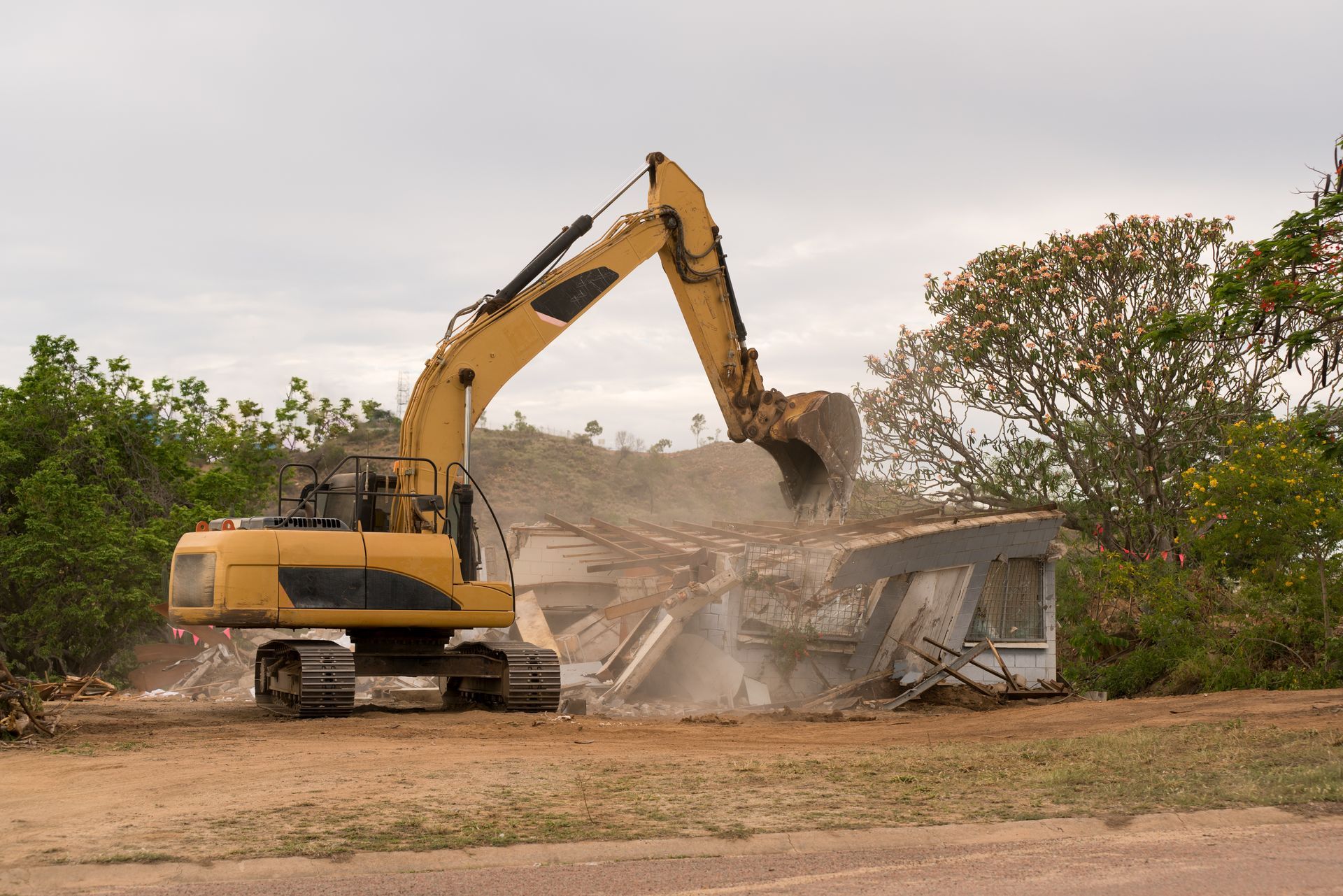
Residential demolition addresses entire houses, detached garages, storage sheds, and secondary structures where renovation costs outweigh replacement value or where property redevelopment requires starting from cleared land. The work involves sequenced removal that prevents structural collapse onto adjacent buildings, manages debris volume that exceeds standard dumpster capacity, and prepares sites for future construction by removing foundations below frost line depth. Countryside Land Clearing & Demolition handles projects throughout Bonfield where homeowners need complete structure removal rather than partial renovation or selective tear-down.
Demolition begins with utility disconnection verification, hazardous material assessment for older homes, and equipment access planning that accounts for narrow driveways or landscaping obstacles. The structure is dismantled in controlled sections, with roofing and upper floors removed before load-bearing walls to maintain stability throughout the process. Foundation removal extends below grade to eliminate settling risks and allow proper soil compaction for whatever follows.
Arrange an on-site consultation to evaluate structure type, access constraints, and cleanup requirements specific to your property.
Residential demolition accounts for foundation depth that varies by structure age, with older homes often having shallower footings that are easier to remove but may extend in unexpected directions due to additions or modifications. Equipment must navigate residential lot dimensions without damaging septic systems, well casings, or underground utilities that serve other buildings or neighboring properties. Debris sorting separates materials by disposal requirements, as asphalt shingles, treated lumber, and appliances cannot be mixed in standard construction waste loads.
Once the project finishes, you see level ground where the building stood, with all foundation material removed and voids filled with compacted soil that matches surrounding grade. The property shows clear boundaries and improved access across areas the structure previously blocked. Cleanup removes nails, broken glass, and small debris that heavy equipment misses, leaving soil ready for seeding, grading, or new construction layout.
Project scope includes detached structures like sheds and garages that often share removal timing with the main house to minimize equipment mobilization costs. Demolition timing considers weather conditions, as frozen ground complicates foundation removal and wet conditions create mud that equipment struggles to navigate. Disruption to surrounding property is managed through equipment staging, debris truck routing, and dust control measures that become particularly important on smaller residential lots.
What Property Owners Usually Ask
Homeowners considering residential demolition need clarity on what the process involves, how long projects take, and what condition the site will be in afterward.
How deep does foundation removal go?
Foundations are removed below the frost line, typically three to four feet in the Bonfield area, to prevent future settling and ensure stable soil for whatever construction or landscaping follows on the cleared site.
What happens to basements during demolition?
Basements are either filled with clean fill and compacted in layers or left as open excavations if future construction will use the existing footprint, depending on soil stability and your plans for the property.
How is dust controlled during the work?
Water spraying suppresses airborne dust during material handling, debris is loaded directly into covered trucks when possible, and demolition sequences prioritize keeping material low to minimize particulate spread across neighboring properties.
What utilities require attention before demolition starts?
Electric, gas, water, and sewer connections must be physically disconnected and capped at the property line or main, with verification from utility companies preventing accidental line strikes during foundation or driveway removal work.
How are materials separated for disposal?
Metal is sorted for recycling, treated lumber is segregated from untreated wood, and concrete or masonry goes to crushing facilities, with separation happening onsite to streamline disposal and reduce landfill loads that accept only specific waste types.
Countryside Land Clearing & Demolition completes residential structure removal with full site cleanup and preparation for future use. Request a free estimate after reviewing your structure condition and site access.